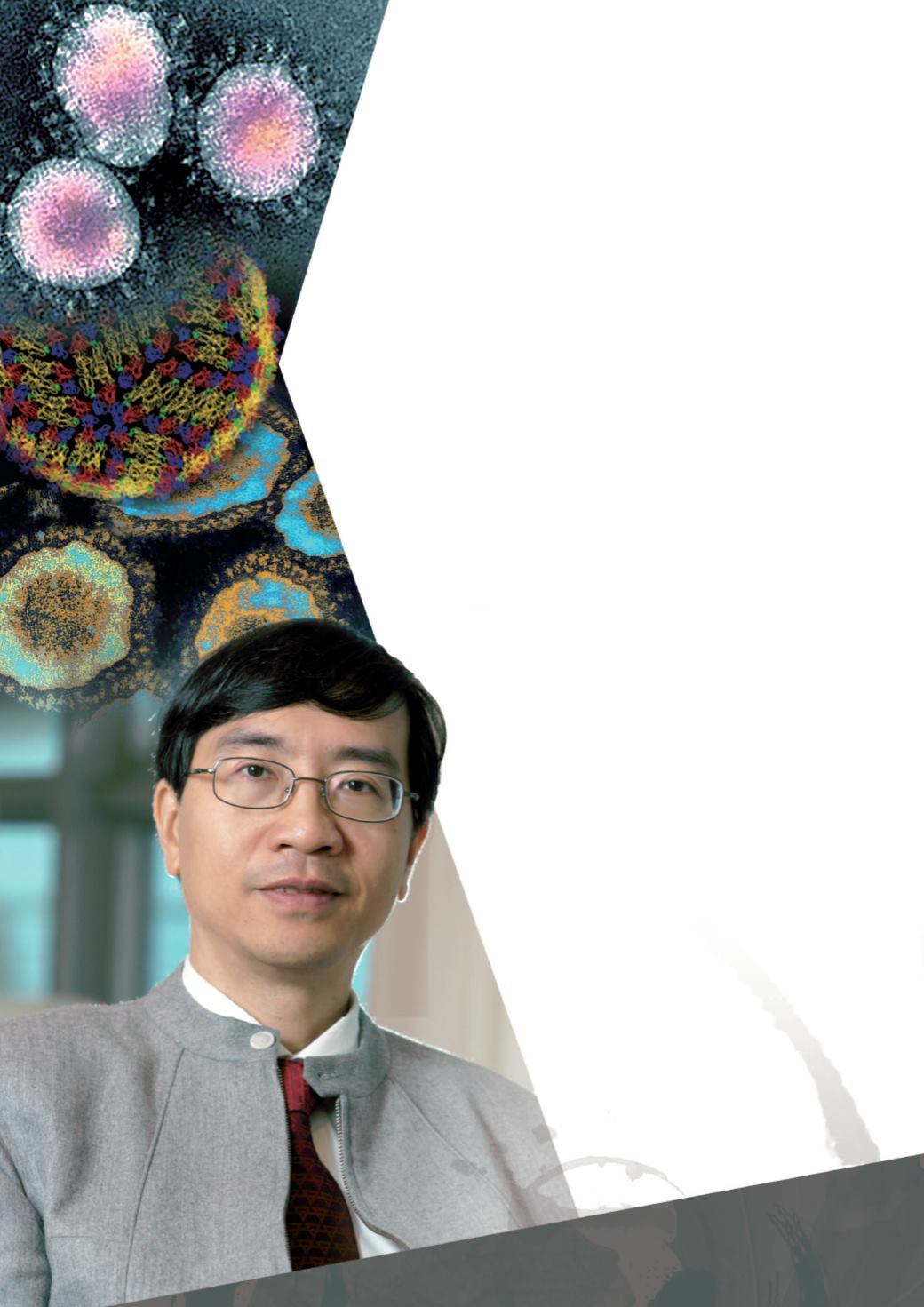
A Silent Hero:
Hong
Kong is particularly susceptible
to emerging infectious diseases. The over-crowded
living environment and frequent migration of
people in and out of Hong Kong have facilitated
the spread of infectious diseases within the local
community, leading to devastating consequences.
In 1997, the first known human cases of influenza A
(H5N1) virus infection (commonly known as avian
influenza or bird flu) were found in Hong Kong. 6
out of the 18 infected succumbed to the virus and
1.5 million birds were slaughtered. In 2003, Severe
Acute Respiratory Syndrome (SARS) spread from
hospitals to communities, infected 1755 people
and caused 299 deaths in Hong Kong. Originating
from southern China, SARS rapidly spread to
37 other countr ies within a mat ter of weeks
before it reached Hong Kong. In 2014, large-
scale outbreaks of dengue fever took place in
Guangdong Province and across Southeast Asia.
As of 28 Nov 2014, 104 cases of dengue fever were
reported by the Centre for Health Protection, 3
cases of which were locally contracted. Aside from
frontline medics, many research experts behind
the scenes have made important contributions in
understanding these epidemics and protecting
lives from emerging infectious diseases. Prof. Yuen
Kwok-yung, the Chair of Infectious Diseases at the
Department of Microbiology of the University of
Hong Kong, is one of them.
Ranked at one of the top 1% researchers in
the world by the Essential Science Indicator, Prof.
Yuen has published over 700 papers in prestigious
peer-reviewed journals with over 15,000 citations.
His career as a microbiologist began in 1988. Over
the years, he and his team have made important
discoveries of novel microbes and disease agents,
such as the SARS coronavirus, Human Coronavirus
HKU1 and the bat SARS coronavirus. He published
the first clinical and laboratory diagnostic paper
on Influenza A H5N1.
Prof. Yuen graduated from the Faculty of
Medicine at the University of Hong Kong in 1981
and originally trained as a surgeon. He then made
the switch to become a physician and eventually


