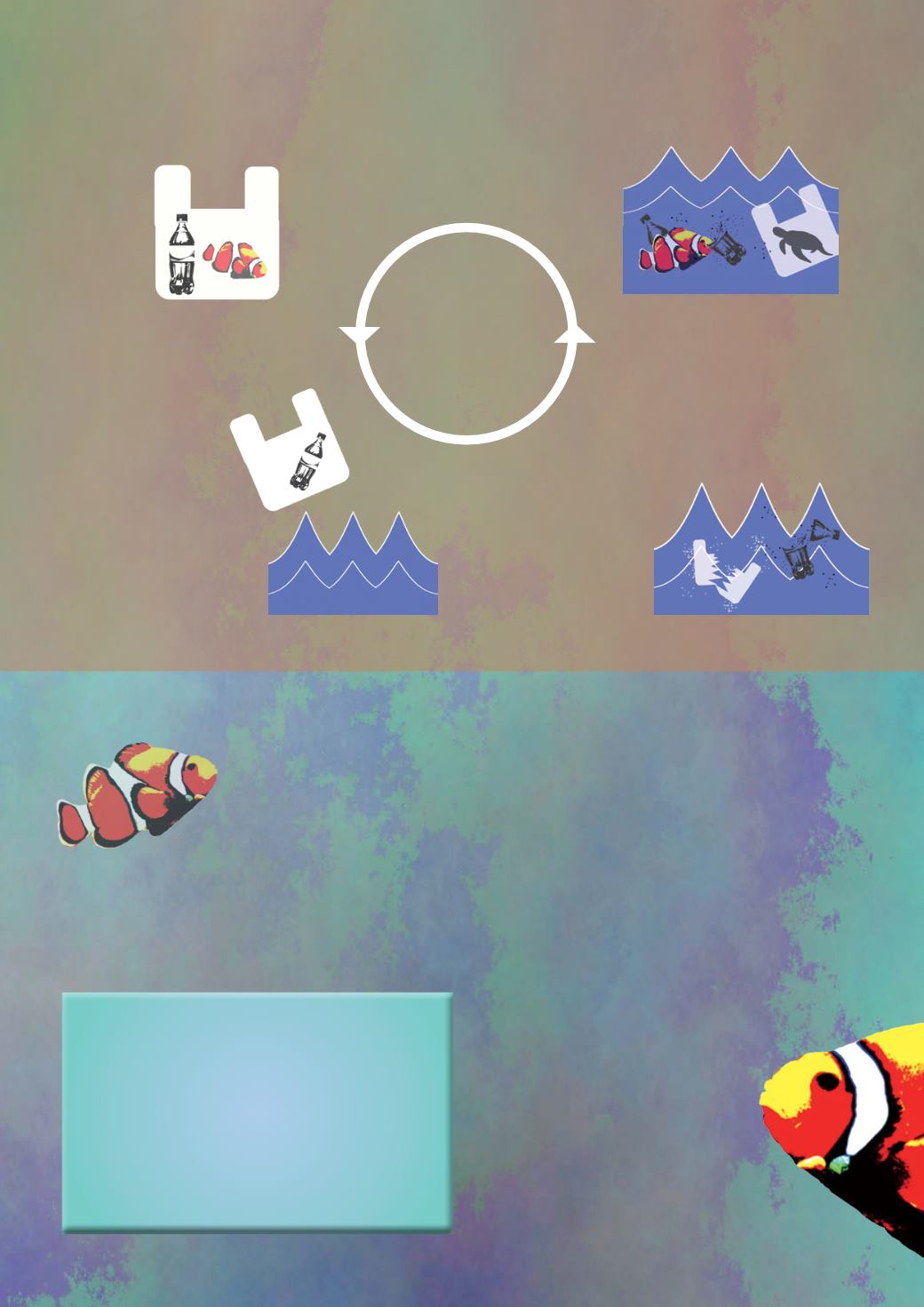
1. Daily use of plastic product and
taking marine animal as food soure.
日常使用塑料產品
和食用海洋生物
2. Improper
Disposal of
plastic into
ocean.
不當棄置塑料產品
到海洋
3. UV radiation and collision
turn plastic in to tiny pieces
紫外光和浪擊將大片塑料變成
微型塑料
4. Marine life suffocates in plastic
bags, or ingests plastic.
塑料引至海洋生物窒息或誤食塑料
塑料海洋
Plastic
oceans
Plastic is so ubiquitous and
convenient these days that
most users utilize them without
co n s i de r i ng t h e l o ng - t e r m
effects. The concern about plastic
runs deeper than its accumulation as seen by the
naked eye. The stark reality reveals that the adverse
effects of macro- and microplastics ripple through
the waters to all levels of the marine ecosystem.
Flowchart of the Plastic ocean
塑料海洋流程圖
從遠處眺望,蔚藍的海是多麼的迷人、是多麼的閃爍、是
多麼的清澈。但仔細再看看,或許我們會發現海洋不再藍、不
再閃爍、不再清徹,卻變成了灰色、汙濁的水,並且到處都有
塑膠碎片在浮著……
我們的太平洋便是如此。一般而言,太平洋是我們心目中
那蔚藍的太平洋。可是仔細觀察下,太平洋確實是一個名符其
實的塑膠海洋。我們對塑膠海洋的第一個印象通常是一個滿
佈塑膠樽和膠袋的海灘,但事實上,在海洋中塑膠的體積卻
是十分微小的,數目更是不可勝數的。
科學家Moore於2001年從海洋中採集了一批
海水樣本。 這些樣本中含有大量細小的塑
膠碎片,海水因而呈現乳黃色,就像一碗
“塑膠湯水”[1]。當較大塊的塑膠隨著
洋流從海岸線往內海流動時,它們會不斷
互相撞擊,繼而變成一塊塊細小的塑膠片。長
期浸泡在海水中的塑膠片被紫外線和太陽的熱力
引發出的自由基所産生的光降解作用變成更細微的塑
Liked the articles in this issue?
Read about Ötzi the Iceman’s last meal
and find out why our bodies can’t synthesize
Vitamin C in our next issue!
喜歡這期的文章?
下期你將會讀到關於奧茨冰人的最後一餐,以
及爲什麽我們的身體無法合成維生素C!


